
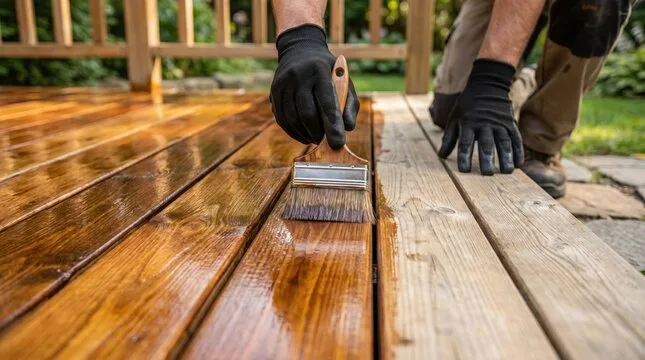
Deck & Fence Staining in the Greater Charlotte Area
Cleaned, brightened, and sanded before staining, with the stain worked into the grain rather than laid on top of it. Backed by our 100% Workmanship Warranty.
Deck & Fence Staining in the Greater Charlotte Area
Outdoor wood in the Piedmont takes more abuse than anything else on a property. Deck boards sit in full sun and standing water through long humid summers, then cycle through freeze and thaw all winter. Fences shed water on one side and hold shade and moisture on the other. Untreated wood goes silver gray within a couple of seasons as the surface fibers break down, and once it starts splintering the damage is no longer cosmetic. Brushworks Painting restores and protects decks, fences, pergolas, screened porches, and exterior doors across the Greater Charlotte Area and surrounding communities.
Staining is almost entirely a prep job. We clean the wood to strip off the gray oxidized layer, dirt, and mildew, apply a brightener to bring the natural tone back rather than leaving it looking bleached, and sand rough or splintered boards and railings smooth. Fasteners get reset and any board that is cracked or soft gets replaced first. Then the stain goes on and gets back brushed, which works it into the grain and into the end cuts where water gets in first. That single step is most of the difference between a finish that lasts two seasons and one that lasts five. We use penetrating stains and sealers from Sherwin-Williams.
Need Deck & Fence Staining?
Get in touch with Austin and the Brushworks Painting team today. We provide upfront, transparent, written estimates for all deck & fence staining projects across the Greater Charlotte Area and surrounding communities.
Specific Deck & Fence Staining We Offer
We specialize in multiple surfaces, materials, and specialized applications.
Deck Staining and Sealing
Decking, stairs, railings, and the end grain, which is where water finds its way in first.
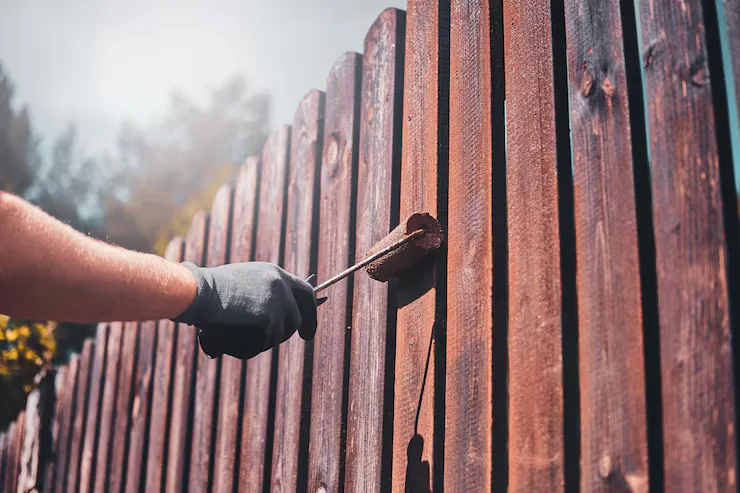
Fence Staining
Sprayed and then back brushed for even coverage on privacy, picket, and board on board fencing.
Pergolas, Arbors, and Porches
Detail work on outdoor structures and screened porch framing.
Cleaning and Brightening
Stripping the gray oxidized layer and mildew, then restoring the wood's natural tone.
Solid Color Deck Coatings
An opaque, film building finish for older wood that is past showing its grain attractively.
Board Repair and Fastener Reset
Cracked, cupped, or soft boards replaced, and popped nails and screws reset before finishing.
Reasons to Look at Deck & Fence Staining
The simplest test there is. Pour a cup of water on a board. If it darkens and absorbs rather than sitting on the surface, the sealer is gone and the wood is taking on moisture with every storm.
That silver color is UV breaking down the surface fibers. Cleaning and brightening pulls the real wood tone back out, but the longer it goes the more sanding it takes to get there.
Dry, weathered decking splinters underfoot, which matters most on the surface your kids and dogs actually use. Sanding and sealing is what keeps it comfortable barefoot.
Fences and porch posts in shade grow algae and mildew in this climate. It holds moisture against the wood, and that is the beginning of rot rather than just a stain.
How We Ensure a Perfect Job, Done Right
We guide every deck & fence staining project through a structured, multi step quality checklist.
Assess the Wood
We check the species, the moisture content, what is on it now, and which boards need replacing, then recommend a stain type and opacity that suits it.
Clean and Brighten
Wash off dirt, mildew, and the gray surface layer, then apply a brightener so the wood comes back to its own tone rather than looking washed out.
Sand and Repair
Rough boards and railings sanded smooth, splinters taken down, fasteners reset, and failed boards swapped out.
Let It Dry, Then Stain
Wood has to be genuinely dry before it will absorb stain, so we check moisture content rather than working to a fixed number of days. Then the stain goes on and gets back brushed into the grain.
Walk It With You
We go over the deck or the fence line with you board by board, then clear the site and put your furniture back.
What Neighbors Say About Our Deck & Fence Staining Services
Read real Google reviews from homeowners and businesses who trusted Brushworks Painting for their deck & fence staining needs.
Ready for Your Deck & Fence Staining Project?
Tell us about the project and Austin will come out, look at the actual surfaces, and send a written estimate for your deck & fence staining. Free, and nothing is owed either way.
- A written, itemized scope before anything starts, so the quote is the price.
- Every project carries our 100% workmanship warranty.
- Austin walks the property and writes the quote himself.
Deck & Fence Staining FAQs
Horizontal surfaces like decking and stair treads usually want redoing every two to three years here, because they take direct sun and standing water. Vertical surfaces like fencing and railings often go four to six years. The water test tells you more than the calendar does: if water soaks in rather than beading, it is time.
Transparent shows the most grain and gives the least UV protection, so it needs redoing soonest. Semi transparent is the middle ground and what most people choose for a deck in decent condition. Solid stain behaves more like paint: it hides the grain and the imperfections and lasts longest, though once you go solid it is difficult to go back.
Yes, though it changes the options. Penetrating stain cannot soak through an existing film, so either we strip and sand back to bare wood for a semi transparent finish, or we prep properly and recoat with another solid color product. We will tell you which we think is worth the money on your deck.
Both. Spraying alone lays stain on top of the wood rather than into it. We spray for coverage and speed, then back brush to work the stain into the grain and the end cuts. Skipping the back brushing is the most common shortcut in this trade and it is why some decks look faded a year later.
Yes, and this is the step that gets skipped most. Wood still damp from washing or from rain will not absorb stain properly, and the finish fails early. We check moisture content before we start rather than assuming a set number of dry days is enough.
Most stains are dry to the touch within a few hours. We ask you to keep foot traffic off for about 24 hours and wait around 48 before moving furniture and grills back on, so nothing prints into a finish that is still setting up.
New pressure treated lumber is usually too wet and too mill glazed to take stain well, and it needs to weather first. Depending on when it was installed, that can be a few months. Staining it too early wastes a good product, so we would rather tell you to wait.
Yes. We move deck furniture and grills, and we cover or protect plantings and siding along a fence line before anything gets sprayed. Everything goes back where it was when we finish.